BioFresh System Repair
Targeted diagnosis for biofresh system repair covering compartment temperatures, airflow, sensors, and IceMaker behavior common in Bay Area installations.

Specialized Liebherr Appliance Repair in San Francisco
Mon–Sat: 8:00 AM – 7:00 PM
Liebherr Refrigerators vary by layout and controls. This page covers the main configurations seen in San Francisco homes and the symptoms that usually point to airflow, sensing, or door conditions.
Liebherr refrigerators in San Francisco homes range from compact under-counter cabinets to tall freestanding combinations with a separate freezer section. This page is a reference for how the common layouts are put together, which symptoms belong to which parts, and what an owner can safely observe without opening anything.
A refrigerator keeps its fresh-food section at a few degrees above freezing by moving cold air through the cabinet. A control board reads a sensor, a compressor and often a circulating fan respond, and a door switch tells the system when the door is open. Because each of these parts depends on the others, a symptom in one area is not always caused by the part that seems closest to it.
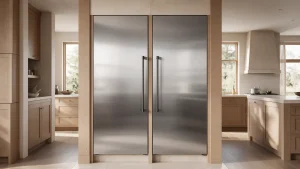
A freestanding cabinet breathes through its back and sides and needs a few centimetres of clear space. An integrated version sits behind a panel and uses a defined vent. Both can be a Liebherr refrigerator, and both have the same basic components, but their installation shapes the way problems appear.
A cabinet that is warm at the top and cold at the bottom suggests air is not circulating evenly. Water on the floor points toward a drain channel or a door that does not close fully. Frost on the rear wall of the fresh-food section hints at a defrost or seal issue. Each of these deserves a measured reading before conclusions are drawn.
On many models the plate sits on the interior side wall near the top, and some carry it on the frame behind the door or on the back wall of a drawer cavity. The plate lists the model name and a service number. Copy both exactly, including any letters, because platform differences depend on them.
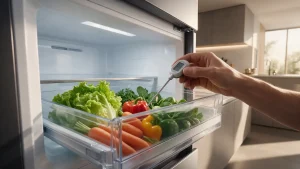
Look at the gasket, make sure the door closes without resistance, and clear anything blocking the vents. Take a temperature reading with a separate thermometer on the middle shelf, and note the display value. Avoid probing behind any panel or switching components in or out of use.
When a refrigerator shows a short code on its display, the meaning depends on the platform, so check the error-code pages for the token that appears and compare it against your model. The model pages describe individual cabinets that are frequently seen in the Bay Area.
Fog and cool nights in San Francisco do not mean refrigerators run easier. Humid air condenses inside a cabinet when the door is opened often, and cabinets installed beside a stove or an exterior wall can see large temperature variation through the day. When describing a problem, mention where the cabinet stands and how often the door is opened.
Wipe the gasket regularly, avoid overpacking the shelves, let hot food cool before storing it, and vacuum dust from vent openings that are visible from the outside. These small habits keep the cabinet running steadily and make any later fault easier to identify.
Every opening lets in a volume of room air that the cabinet must cool and dry again. Households with children, or kitchens used for entertaining, will see more recovery cycles than a quiet home. Opening the door only when needed and closing it firmly are free improvements, and they also make temperature readings easier to interpret.
A short written description of the fault also helps when you ask for advice. Say which shelf or zone is affected, what the thermometer showed and when, and what you have already tried.
Usually on the rating plate inside the fresh-food compartment or on the door frame. On built-in units open the door fully.
No. Short codes can have different meanings by platform and generation.
BioFresh is a temperature-controlled zone with its own behavior. Problems there are diagnosed separately from the main cabinet.
Targeted diagnosis for biofresh system repair covering compartment temperatures, airflow, sensors, and IceMaker behavior common in Bay Area installations.
Targeted diagnosis for bottom-freezer refrigerator repair covering compartment temperatures, airflow, sensors, and IceMaker behavior common in Bay Area installations.
Targeted diagnosis for built-in refrigeration repair covering compartment temperatures, airflow, sensors, and IceMaker behavior common in Bay Area installations.
Targeted diagnosis for monolith refrigeration repair covering compartment temperatures, airflow, sensors, and IceMaker behavior common in Bay Area installations.
Targeted diagnosis for refrigerator repair covering compartment temperatures, airflow, sensors, and IceMaker behavior common in Bay Area installations.
AFr points to a condition described in Liebherr documentation for specific platforms. Measured temperatures clarify the impact.
BT001 points to a condition described in Liebherr documentation for specific platforms. Measured temperatures clarify the impact.
btE points to a condition described in Liebherr documentation for specific platforms. Measured temperatures clarify the impact.
btP points to a condition described in Liebherr documentation for specific platforms. Measured temperatures clarify the impact.
dOr points to a condition described in Liebherr documentation for specific platforms. Measured temperatures clarify the impact.
E0 points to a condition described in Liebherr documentation for specific platforms. Measured temperatures clarify the impact.
Diagnostic notes for the CBN 5413 focusing on compartment behavior and model-specific checks.
Diagnostic notes for the CBNes 5168 focusing on compartment behavior and model-specific checks.
Diagnostic notes for the CS 2062 focusing on compartment behavior and model-specific checks.
Diagnostic notes for the HC 1540 focusing on compartment behavior and model-specific checks.
Diagnostic notes for the HC 1541 focusing on compartment behavior and model-specific checks.
Diagnostic notes for the HCB 1560 focusing on compartment behavior and model-specific checks.
Diagnostic notes for the HCB 2080 focusing on compartment behavior and model-specific checks.
Diagnostic notes for the ICBN 3366 focusing on compartment behavior and model-specific checks.
Diagnostic notes for the ICBN 3386 focusing on compartment behavior and model-specific checks.
Diagnostic notes for the Monolith MRB 3600 focusing on compartment behavior and model-specific checks.
Diagnostic notes for the SBS 246 focusing on compartment behavior and model-specific checks.
Diagnostic notes for the SBSes 7155 focusing on compartment behavior and model-specific checks.
Reference for biofresh refrigeration covering subtypes, typical symptoms, and where to find the model number in San Francisco installations.
Reference for bottom-freezer refrigerators covering subtypes, typical symptoms, and where to find the model number in San Francisco installations.
Reference for built-in refrigeration covering subtypes, typical symptoms, and where to find the model number in San Francisco installations.
Reference for icemakers covering subtypes, typical symptoms, and where to find the model number in San Francisco installations.
Reference for Liebherr freezers covering subtypes, typical symptoms, and where to find the model number in San Francisco installations.
Reference for monolith refrigeration covering subtypes, typical symptoms, and where to find the model number in San Francisco installations.
Reference for nofrost refrigeration covering subtypes, typical symptoms, and where to find the model number in San Francisco installations.
Reference for wine cabinets covering subtypes, typical symptoms, and where to find the model number in San Francisco installations.
Share a few details and we’ll confirm an appointment. Prefer to talk? Call us and we’ll help right away.