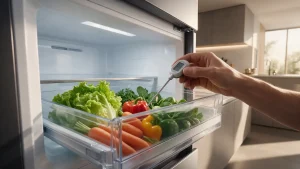
BioFresh Refrigeration
Reference for biofresh refrigeration covering subtypes, typical symptoms, and where to find the model number in San Francisco installations.

Specialized Liebherr Appliance Repair in San Francisco
Mon–Sat: 8:00 AM – 7:00 PM
San Francisco homeowners dealing with bottom-freezer refrigerator repair get measured diagnosis first. We separate simple seal or setting issues from sensor, airflow, or control problems before any parts are considered.
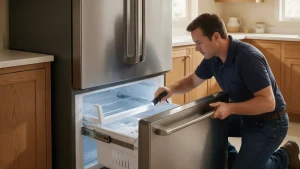
Bottom-freezer Liebherr models place the fresh-food compartment above and the freezer in a pull-out drawer below. That layout gives easy eye-level access to everyday food, but it also creates its own set of wear points, mostly around the drawer, its gasket, and the way cold air is shared between the two sections.
The most common complaint is frost forming along the drawer front or inside the lower cabinet. A drawer that does not close fully, or that is overloaded so the basket rubs the seal, lets warm air in every time it is used. The resulting frost can also change how cold air moves and make the refrigerator section above warm up even though the freezer appears fine.
A drawer gasket works differently from a hinged door seal because the drawer slides outward and must return to the same position every time. Dirt in the runners, an uneven load, or a basket that sits crooked can leave a thin gap along the top edge. Cleaning the visible gasket with warm water and checking that the basket sits squarely is the safe owner check, and it resolves more cases than most people expect.
Many bottom-freezer models cool both compartments from a shared or linked system, with air moving through ducts at the back. Frost that builds near those ducts can restrict the flow and starve the upper section. If the top compartment is warm and the bottom is cold, that pattern is a strong clue and is worth recording with times and temperatures before calling.
Empty the drawer slightly if it is packed to the top, make sure nothing is stuck beneath it, and push it fully home. Read the freezer with a separate thermometer after an hour of normal use. Do not chip frost with tools and do not remove the lower plinth to look inside.
The visit begins by checking drawer travel and seal contact, then measures both sections over time. Frost patterns are read like a map of where warm air is getting in. If a defrost problem is suspected, its timing and the temperature behavior after a cycle are examined before parts are discussed.
Bottom-freezer units are popular in compact San Francisco kitchens, where they are often fitted snugly against cabinets and a wall. A tight rear gap and a floor that is not quite level can both stop a drawer from closing true. Levelling the feet and allowing proper clearance are among the first things worth confirming on an older installation.
Note the model, how long the frost has been appearing, and whether the drawer closes by itself or needs a push. A photo of the frost pattern helps a great deal. You will receive a written estimate before any repair is carried out, and nothing is replaced without your agreement.
The way a drawer is loaded affects how well it seals. Tall boxes at the front can prevent the drawer from closing by a few millimetres, and a basket that is pushed back unevenly may sit crooked on its rails. Distributing the weight evenly and keeping the front edge clear is a simple habit that prevents many frost complaints.
In some layouts the refrigerator section depends on cold air supplied through a duct from the freezer side. When frost narrows that duct, the upper compartment receives less cooling and warms gradually, long before anything looks wrong in the freezer. Watching the upper section for slow, steady warming rather than sudden changes helps point toward this cause.
A bottom-freezer places its compressor at the lower rear, so sound travels through the floor and the cabinet base. A buzz that appears only when the unit starts may simply be a loose plinth or a floor panel resonating, while a ticking from the drawer often means the basket is touching the runner. Describe when you hear it, because the timing is informative.
Many codes indicate a sensor or temporary condition. The unit may continue running while the control limits certain functions. Measured temperatures tell whether food safety is affected.
A normal power cycle is safe. Repeated resets without recording the code and temperatures usually do not resolve the underlying condition.
Yes. Platform differences change sensor locations, BioFresh behavior, and code meanings. The rating plate number is the starting point.
Reference for biofresh refrigeration covering subtypes, typical symptoms, and where to find the model number in San Francisco installations.
Reference for bottom-freezer refrigerators covering subtypes, typical symptoms, and where to find the model number in San Francisco installations.
Reference for built-in refrigeration covering subtypes, typical symptoms, and where to find the model number in San Francisco installations.
Reference for Liebherr refrigerators covering subtypes, typical symptoms, and where to find the model number in San Francisco installations.
Reference for monolith refrigeration covering subtypes, typical symptoms, and where to find the model number in San Francisco installations.
AFr points to a condition described in Liebherr documentation for specific platforms. Measured temperatures clarify the impact.
BT001 points to a condition described in Liebherr documentation for specific platforms. Measured temperatures clarify the impact.
btE points to a condition described in Liebherr documentation for specific platforms. Measured temperatures clarify the impact.
btP points to a condition described in Liebherr documentation for specific platforms. Measured temperatures clarify the impact.
dOr points to a condition described in Liebherr documentation for specific platforms. Measured temperatures clarify the impact.
E0 points to a condition described in Liebherr documentation for specific platforms. Measured temperatures clarify the impact.
Targeted diagnosis for biofresh system repair covering compartment temperatures, airflow, sensors, and IceMaker behavior common in Bay Area installations.
Targeted diagnosis for built-in refrigeration repair covering compartment temperatures, airflow, sensors, and IceMaker behavior common in Bay Area installations.
Targeted diagnosis for freezer repair covering compartment temperatures, airflow, sensors, and IceMaker behavior common in Bay Area installations.
Targeted diagnosis for icemaker repair covering compartment temperatures, airflow, sensors, and IceMaker behavior common in Bay Area installations.
Targeted diagnosis for monolith refrigeration repair covering compartment temperatures, airflow, sensors, and IceMaker behavior common in Bay Area installations.
Targeted diagnosis for nofrost system repair covering compartment temperatures, airflow, sensors, and IceMaker behavior common in Bay Area installations.
Targeted diagnosis for refrigerator repair covering compartment temperatures, airflow, sensors, and IceMaker behavior common in Bay Area installations.
Targeted diagnosis for wine cabinet repair covering compartment temperatures, airflow, sensors, and IceMaker behavior common in Bay Area installations.
Share a few details and we’ll confirm an appointment. Prefer to talk? Call us and we’ll help right away.