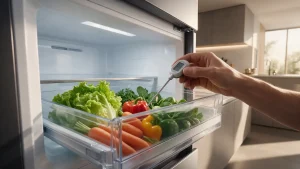
BioFresh System Repair
Targeted diagnosis for biofresh system repair covering compartment temperatures, airflow, sensors, and IceMaker behavior common in Bay Area installations.

Specialized Liebherr Appliance Repair in San Francisco
Mon–Sat: 8:00 AM – 7:00 PM
Monolith Refrigeration vary by layout and controls. This page covers the main configurations seen in San Francisco homes and the symptoms that usually point to airflow, sensing, or door conditions.
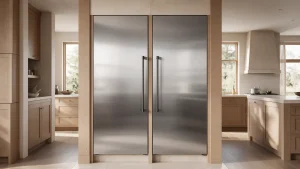
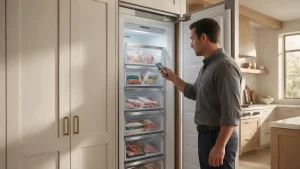
Monolith is Liebherr’s range of full-height column appliances, offered as refrigerator columns, freezer columns, and wine columns that can stand alone or be combined into a wall. The design emphasises a single uniform front, so differences between separate columns are hidden, and the reference below explains how to tell them apart.
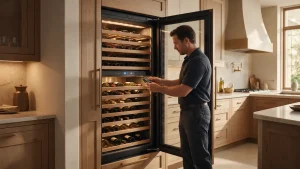
Each column has its own door, controls, and cooling system. A refrigerator column runs much like an ordinary refrigerator but taller, and a freezer column has drawers or shelves behind a tall door. A wine column offers zoned storage. Even when two columns are joined by a trim, they operate independently.
Trim pieces between columns are decorative but also hold the cabinets in position. If a trim is loose, or if a column is pushed out of line, doors may stop sealing and alarms can sound. Gaps visible from the front are a useful first clue.
Cold air settles, so lower shelves of a column are colder than upper ones. A noticeable gradient is normal, but a very large one, or one that changes suddenly, calls for a measured comparison between a top and a bottom shelf.
Because columns stand flush with other cabinetry, the label is often inside, on the side wall or behind a drawer. Photograph it for each column, as a matched set may include different models with different service numbers.
Look along the vertical gaps, check that each door swings freely, and take readings at two heights. Keep the base grille clear. Do not detach trims, kickplates, or any panel that joins the columns.
The Monolith service page explains the visit steps. Model entries such as the MRB 3600 and MF 3051 in the model section describe a refrigerator column and a freezer column respectively, and the error-code pages explain display tokens by platform.
Columns are often carried up staircases in pieces and fitted into renovated homes with non-square walls. Leveling and door alignment therefore receive extra attention in this area, and an installation that was made quickly may still need adjustment months later.
Dust the base grille, wipe the gasket, and avoid leaning on or hanging items from the door. Check the trim gaps from time to time, since they can change slowly as the floor settles. Early notice of a gap is much easier to deal with than a door that has been misaligned for months.
When a refrigerator and a freezer column are paired, set each to its own target and check them independently. Record both readings when reporting a problem, so the report shows clearly which column has changed rather than describing the pair as a whole.
Name the column, say which shelf or drawer is affected, and give readings at two heights. Mention whether the adjoining column behaves normally, whether the door alarm sounds, and whether any trim has moved. A photo of the whole installation and one of the gap that bothers you will shorten the first conversation.
A tall door magnifies small misalignments, so a gap that is barely visible at counter height can be several millimetres wide at the top. Alarms that sound only when the upper part of the door is opened, or condensation that collects only near the top corner, are typical signs. Catching them early protects the gasket and avoids a drift in temperature that otherwise goes unnoticed for weeks.
Usually on the rating plate inside the fresh-food compartment or on the door frame. On built-in units open the door fully.
No. Short codes can have different meanings by platform and generation.
BioFresh is a temperature-controlled zone with its own behavior. Problems there are diagnosed separately from the main cabinet.
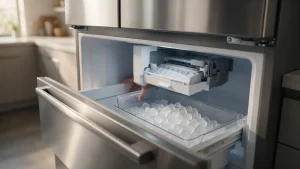
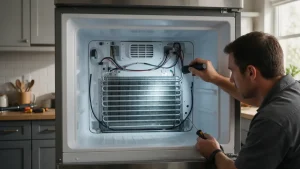
Targeted diagnosis for biofresh system repair covering compartment temperatures, airflow, sensors, and IceMaker behavior common in Bay Area installations.
Targeted diagnosis for bottom-freezer refrigerator repair covering compartment temperatures, airflow, sensors, and IceMaker behavior common in Bay Area installations.
Targeted diagnosis for built-in refrigeration repair covering compartment temperatures, airflow, sensors, and IceMaker behavior common in Bay Area installations.
Targeted diagnosis for monolith refrigeration repair covering compartment temperatures, airflow, sensors, and IceMaker behavior common in Bay Area installations.
Targeted diagnosis for refrigerator repair covering compartment temperatures, airflow, sensors, and IceMaker behavior common in Bay Area installations.
AFr points to a condition described in Liebherr documentation for specific platforms. Measured temperatures clarify the impact.
BT001 points to a condition described in Liebherr documentation for specific platforms. Measured temperatures clarify the impact.
btE points to a condition described in Liebherr documentation for specific platforms. Measured temperatures clarify the impact.
btP points to a condition described in Liebherr documentation for specific platforms. Measured temperatures clarify the impact.
dOr points to a condition described in Liebherr documentation for specific platforms. Measured temperatures clarify the impact.
E0 points to a condition described in Liebherr documentation for specific platforms. Measured temperatures clarify the impact.
Diagnostic notes for the CBN 5413 focusing on compartment behavior and model-specific checks.
Diagnostic notes for the CBNes 5168 focusing on compartment behavior and model-specific checks.
Diagnostic notes for the CS 2062 focusing on compartment behavior and model-specific checks.
Diagnostic notes for the HC 1540 focusing on compartment behavior and model-specific checks.
Diagnostic notes for the HC 1541 focusing on compartment behavior and model-specific checks.
Diagnostic notes for the HCB 1560 focusing on compartment behavior and model-specific checks.
Diagnostic notes for the HCB 2080 focusing on compartment behavior and model-specific checks.
Diagnostic notes for the ICBN 3366 focusing on compartment behavior and model-specific checks.
Diagnostic notes for the ICBN 3386 focusing on compartment behavior and model-specific checks.
Diagnostic notes for the Monolith MRB 3600 focusing on compartment behavior and model-specific checks.
Diagnostic notes for the SBS 246 focusing on compartment behavior and model-specific checks.
Diagnostic notes for the SBSes 7155 focusing on compartment behavior and model-specific checks.
Reference for biofresh refrigeration covering subtypes, typical symptoms, and where to find the model number in San Francisco installations.
Reference for bottom-freezer refrigerators covering subtypes, typical symptoms, and where to find the model number in San Francisco installations.
Reference for built-in refrigeration covering subtypes, typical symptoms, and where to find the model number in San Francisco installations.
Reference for icemakers covering subtypes, typical symptoms, and where to find the model number in San Francisco installations.
Reference for Liebherr freezers covering subtypes, typical symptoms, and where to find the model number in San Francisco installations.
Reference for Liebherr refrigerators covering subtypes, typical symptoms, and where to find the model number in San Francisco installations.
Reference for nofrost refrigeration covering subtypes, typical symptoms, and where to find the model number in San Francisco installations.
Reference for wine cabinets covering subtypes, typical symptoms, and where to find the model number in San Francisco installations.
Share a few details and we’ll confirm an appointment. Prefer to talk? Call us and we’ll help right away.