BioFresh Refrigeration
Reference for biofresh refrigeration covering subtypes, typical symptoms, and where to find the model number in San Francisco installations.

Specialized Liebherr Appliance Repair in San Francisco
Mon–Sat: 8:00 AM – 7:00 PM
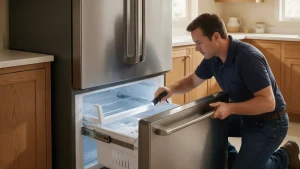
San Francisco homeowners dealing with biofresh system repair get measured diagnosis first. We separate simple seal or setting issues from sensor, airflow, or control problems before any parts are considered.
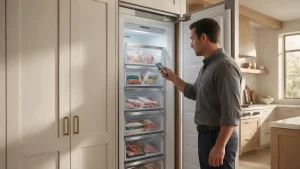
BioFresh drawers are Liebherr’s fresh-keeping compartments, designed to hold a temperature close to freezing and a controlled humidity for items such as fish, meat, dairy, and vegetables. When a drawer misbehaves, food either spoils sooner than it should or freezes at the edges, and both outcomes call for a measured approach rather than a guess.
The BioFresh zone is intended to run colder than the main fresh-food section, around the 0°C region, and many drawers offer a choice between a dry and a humid setting. The exact range and options depend on the model and its operating instructions, so the first step is always to confirm what the unit was designed to deliver.
The humidity setting changes how much air is allowed to move through the drawer. A slider that has stuck, or a drawer lid with dirt in the channel, can leave the drawer permanently in one mode. That affects how quickly vegetables wilt or how much condensation forms, and often has nothing to do with the cooling system.
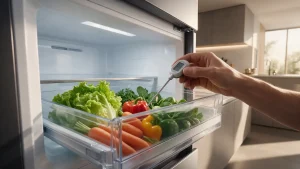
With a target near the freezing point, a small error in sensing or airflow shows up as ice. A drawer packed against the back wall, a warm load added at one time, or a sensor that reads slightly high can each push the cabinet below the intended range. Measuring the drawer interior with a separate probe thermometer for several hours shows whether the temperature actually dips.
Take food out of the back of the drawer so air can reach the rear wall. Check that the drawer slides all the way in and the lid sits flat. Move the humidity control through its range and see whether it responds smoothly. Record the setting alongside a thermometer reading. Do not detach the drawer rails or remove any rear cover.
The technician measures the BioFresh interior independently from the main compartment, compares it with the set value, and examines whether cold air reaches the drawer as intended. Sensor placement and the control response are considered once airflow and seals are ruled out.
San Francisco households often buy fish and produce frequently from nearby markets and expect to keep them fresh for several days, so a BioFresh fault is noticed quickly. Coastal humidity can also add moisture to the drawer seals in older buildings, which makes cleaning and drying the contact surface worth doing before a visit.
Note which drawer is affected, what you stored in it, and how long it has behaved this way. The written estimate arrives before any repair, and you keep the choice to proceed or not.
A drawer that is crammed full leaves no room for air to circulate, and food pressed against the back wall is the first to freeze. Keep items a finger’s width from the rear, avoid placing warm leftovers in the drawer, and separate items that give off a lot of moisture from those that prefer dry air. These habits affect results as much as any setting.
If your model allows a choice, use the dry setting for meat and fish and the humid setting for leafy vegetables and herbs, and always check the operating instructions for what your drawer is designed for. Switching the setting is a normal user action and does not involve any part of the cooling system.
If a measured temperature in the drawer stays well away from the set value for many hours while airflow and the seal look normal, a sensing problem becomes more likely. That is a technician decision, because it requires access that owners should not attempt.
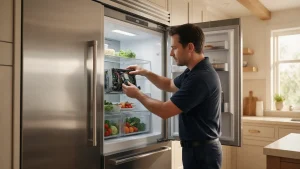
During a BioFresh visit the drawer reading, the main compartment reading, the humidity setting, and the position of the drawer are all noted. Together they show whether the drawer is behaving as designed or drifting away from it, and they give you a clear explanation of what was found and why a particular repair is or is not recommended.
If the drawer proves to be working as intended and the issue is how it is loaded or set, you will be told so plainly and shown the adjustment, rather than being offered a repair that does not address the cause.
Many codes indicate a sensor or temporary condition. The unit may continue running while the control limits certain functions. Measured temperatures tell whether food safety is affected.
A normal power cycle is safe. Repeated resets without recording the code and temperatures usually do not resolve the underlying condition.
Yes. Platform differences change sensor locations, BioFresh behavior, and code meanings. The rating plate number is the starting point.
Reference for biofresh refrigeration covering subtypes, typical symptoms, and where to find the model number in San Francisco installations.
Reference for bottom-freezer refrigerators covering subtypes, typical symptoms, and where to find the model number in San Francisco installations.
Reference for built-in refrigeration covering subtypes, typical symptoms, and where to find the model number in San Francisco installations.
Reference for Liebherr refrigerators covering subtypes, typical symptoms, and where to find the model number in San Francisco installations.
Reference for monolith refrigeration covering subtypes, typical symptoms, and where to find the model number in San Francisco installations.
AFr points to a condition described in Liebherr documentation for specific platforms. Measured temperatures clarify the impact.
BT001 points to a condition described in Liebherr documentation for specific platforms. Measured temperatures clarify the impact.
btE points to a condition described in Liebherr documentation for specific platforms. Measured temperatures clarify the impact.
btP points to a condition described in Liebherr documentation for specific platforms. Measured temperatures clarify the impact.
dOr points to a condition described in Liebherr documentation for specific platforms. Measured temperatures clarify the impact.
E0 points to a condition described in Liebherr documentation for specific platforms. Measured temperatures clarify the impact.
Targeted diagnosis for bottom-freezer refrigerator repair covering compartment temperatures, airflow, sensors, and IceMaker behavior common in Bay Area installations.
Targeted diagnosis for built-in refrigeration repair covering compartment temperatures, airflow, sensors, and IceMaker behavior common in Bay Area installations.
Targeted diagnosis for freezer repair covering compartment temperatures, airflow, sensors, and IceMaker behavior common in Bay Area installations.
Targeted diagnosis for icemaker repair covering compartment temperatures, airflow, sensors, and IceMaker behavior common in Bay Area installations.
Targeted diagnosis for monolith refrigeration repair covering compartment temperatures, airflow, sensors, and IceMaker behavior common in Bay Area installations.
Targeted diagnosis for nofrost system repair covering compartment temperatures, airflow, sensors, and IceMaker behavior common in Bay Area installations.
Targeted diagnosis for refrigerator repair covering compartment temperatures, airflow, sensors, and IceMaker behavior common in Bay Area installations.
Targeted diagnosis for wine cabinet repair covering compartment temperatures, airflow, sensors, and IceMaker behavior common in Bay Area installations.
Share a few details and we’ll confirm an appointment. Prefer to talk? Call us and we’ll help right away.