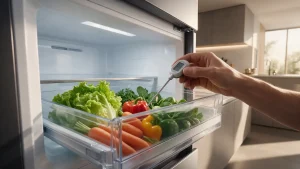
BioFresh Refrigeration
Reference for biofresh refrigeration covering subtypes, typical symptoms, and where to find the model number in San Francisco installations.

Specialized Liebherr Appliance Repair in San Francisco
Mon–Sat: 8:00 AM – 7:00 PM
San Francisco homeowners dealing with refrigerator repair get measured diagnosis first. We separate simple seal or setting issues from sensor, airflow, or control problems before any parts are considered.
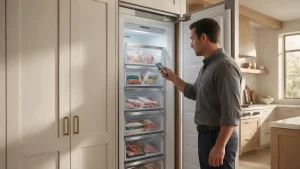
A Liebherr refrigerator that no longer holds its set temperature rarely fails in a single obvious way. The fresh-food section may read correctly on the display while the shelves near the back run warm, or the door may close but let in humid air along one corner. Refrigerator repair in San Francisco starts by finding out which of those stories is true, using a separate thermometer rather than the panel alone.
The complaints that lead to a visit are fairly consistent. Milk spoils early even though the display shows the target value, condensation collects on the shelves or the liner, the compressor runs for long stretches, or an alarm sounds shortly after the door is closed. Each of these has several possible origins, and the order in which they are ruled out saves time and avoids replacing parts that were never at fault.
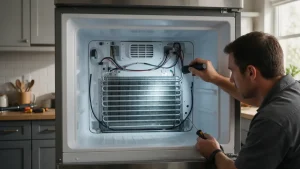
In most Liebherr refrigerators the control board reads one or more temperature sensors and decides when the compressor and any circulation fan should run. A sensor that drifts misleads the board, so the cabinet can be cooled too little or too much without any component actually breaking. That is why measured readings at several shelf heights come before any conclusion about the compressor.
The gasket is the simplest and most overlooked cause of a warm cabinet. A fold in the seal, a thin film of spilled food, or a door that has dropped slightly on its hinge lets warm air in, and the refrigerator compensates by running longer. Looking along the closed door in good light, and testing whether a sheet of paper is held evenly all the way around, tells you a great deal without any tools.
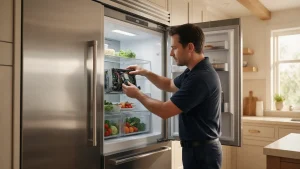
Place a separate thermometer on the middle shelf and leave it for several hours of normal use. Make sure bottles, trays, or the crisper drawer are not holding the door off its seal. Wipe the visible gasket with warm water, and keep food away from the air outlets so cold air can circulate. Write down any code exactly as it appears.
Leave panels, covers, and the back of the unit alone. Nothing about a warm cabinet requires an owner to reach into electrical or sealed areas.
If the cabinet stays above safe food temperature after a full day of undisturbed operation, if the reading keeps climbing, or if the compressor repeatedly starts and stops, a visit is the sensible next step. Move perishable items to another cooler in the meantime and keep the readings you took, because they shorten the diagnosis considerably.
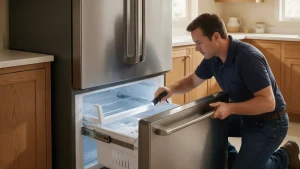
The technician measures the cabinet, inspects the gasket and door alignment, listens to the circulation fan where it is reachable, and reads any stored alarm history. Findings are explained in plain terms and written into an estimate before work starts.
Many kitchens here sit in buildings with older wiring, narrow service corridors, and fog-driven humidity that lingers around seals. A refrigerator tucked beside a heat-producing oven or under a south-facing window may simply be fighting its surroundings, and that context is noted at the start. Where parking or building entry takes planning, mention it when you book so access is sorted before the day.
A cabinet with a single compressor behaves differently from a dual-circuit model, and a unit with fan-assisted air handling differs again from one that cools by a plain evaporator plate. The rating plate number tells the technician which of these applies, and therefore which readings to expect.
The panel on a Liebherr refrigerator shows a set temperature and often an actual value, but it can also store alarms that have already cleared. A single alarm after a long door opening is normal behavior, while repeated alarms at the same time every day suggest a pattern linked to the household routine or to the room temperature. Keeping a short log of times and readings for two or three days turns a vague complaint into something a technician can act on straight away.
Wiping the gasket, clearing the drip channel visible at the back of the fresh-food section, and washing the crisper runners will not fix a failed component, but they remove the common mechanical causes that look like failures. Use warm water and a soft cloth, dry the seal afterward, and avoid sprays near the control panel.
A refrigerator that sits one or two degrees above its target is not always failing. A new grocery load, a summer heat wave, or a recent power cut will all push the reading up for a while. Allow a full day of undisturbed operation before deciding that the unit has a fault, unless food is clearly at risk, in which case move it and arrange a visit sooner.
Many codes indicate a sensor or temporary condition. The unit may continue running while the control limits certain functions. Measured temperatures tell whether food safety is affected.
A normal power cycle is safe. Repeated resets without recording the code and temperatures usually do not resolve the underlying condition.
Yes. Platform differences change sensor locations, BioFresh behavior, and code meanings. The rating plate number is the starting point.
Reference for biofresh refrigeration covering subtypes, typical symptoms, and where to find the model number in San Francisco installations.
Reference for bottom-freezer refrigerators covering subtypes, typical symptoms, and where to find the model number in San Francisco installations.
Reference for built-in refrigeration covering subtypes, typical symptoms, and where to find the model number in San Francisco installations.
Reference for Liebherr refrigerators covering subtypes, typical symptoms, and where to find the model number in San Francisco installations.
Reference for monolith refrigeration covering subtypes, typical symptoms, and where to find the model number in San Francisco installations.
AFr points to a condition described in Liebherr documentation for specific platforms. Measured temperatures clarify the impact.
BT001 points to a condition described in Liebherr documentation for specific platforms. Measured temperatures clarify the impact.
btE points to a condition described in Liebherr documentation for specific platforms. Measured temperatures clarify the impact.
btP points to a condition described in Liebherr documentation for specific platforms. Measured temperatures clarify the impact.
dOr points to a condition described in Liebherr documentation for specific platforms. Measured temperatures clarify the impact.
E0 points to a condition described in Liebherr documentation for specific platforms. Measured temperatures clarify the impact.
Targeted diagnosis for biofresh system repair covering compartment temperatures, airflow, sensors, and IceMaker behavior common in Bay Area installations.
Targeted diagnosis for bottom-freezer refrigerator repair covering compartment temperatures, airflow, sensors, and IceMaker behavior common in Bay Area installations.
Targeted diagnosis for built-in refrigeration repair covering compartment temperatures, airflow, sensors, and IceMaker behavior common in Bay Area installations.
Targeted diagnosis for freezer repair covering compartment temperatures, airflow, sensors, and IceMaker behavior common in Bay Area installations.
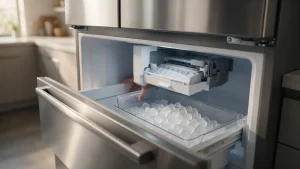
Targeted diagnosis for icemaker repair covering compartment temperatures, airflow, sensors, and IceMaker behavior common in Bay Area installations.
Targeted diagnosis for monolith refrigeration repair covering compartment temperatures, airflow, sensors, and IceMaker behavior common in Bay Area installations.
Targeted diagnosis for nofrost system repair covering compartment temperatures, airflow, sensors, and IceMaker behavior common in Bay Area installations.
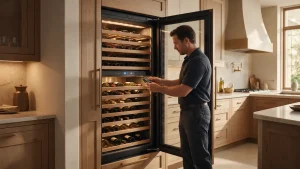
Targeted diagnosis for wine cabinet repair covering compartment temperatures, airflow, sensors, and IceMaker behavior common in Bay Area installations.
Share a few details and we’ll confirm an appointment. Prefer to talk? Call us and we’ll help right away.