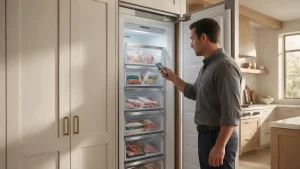
Freezers
Reference for Liebherr freezers covering subtypes, typical symptoms, and where to find the model number in San Francisco installations.

Specialized Liebherr Appliance Repair in San Francisco
Mon–Sat: 8:00 AM – 7:00 PM
San Francisco homeowners dealing with nofrost system repair get measured diagnosis first. We separate simple seal or setting issues from sensor, airflow, or control problems before any parts are considered.
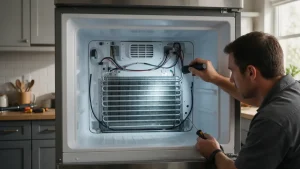
NoFrost freezers prevent ice from building up on the walls by cooling the compartment with circulated air and periodically melting frost off a hidden evaporator. That convenience depends on a small chain of parts working in sequence, and when one link weakens the freezer may start to ice over in places it never used to.
A fan moves cold air from the evaporator into the freezer. Over time, frost forms on the evaporator and a defrost heater melts it at intervals, sending the water to a drain that leads out of the cabinet. If the fan slows, the defrost cycle is skipped, or the drain freezes, the result is the same: frost where there should be none, or water where it should not be.
Overfilled shelves, or a bag of frozen vegetables pressed against the rear vents, can block the flow of cold air and lead to uneven freezing. Leaving a clear gap in front of the vents, and keeping the door closed fully, solves a surprising share of NoFrost complaints. Listening for the fan when the door is open shows whether air is moving, though the sound varies by model.
A defrost cycle should leave the freezer only briefly warmer, and the temperature should return to normal soon afterward. If the temperature stays raised, or the frost returns within days of a manual defrost, the cycle itself is worth investigating. A blocked drain keeps meltwater in the cabinet and refreezes it as ice at the base.
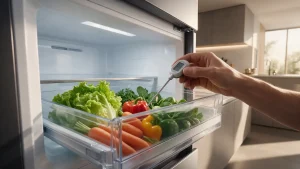
Empty a shelf or two to see the vents, check the door seal, and measure the freezer with a separate thermometer. If frost is heavy, switching the freezer off to defrost it fully, with towels to catch the water, is a reasonable step. Do not use sharp tools or a heat gun, and do not remove the rear panel.
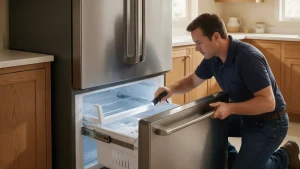
The visit looks at the frost pattern, evaporator fan operation where reachable, defrost timing, and the temperature curve over a cycle. Where the control is documented to report a defrost-related condition, that information is combined with the readings. Parts are discussed only after the sequence has been observed.
Humid coastal air carries more moisture into the freezer each time the door is opened, and in older apartments a freezer in an unheated pantry or garage can face wide temperature swings. Both increase frost load and are worth mentioning when you describe the problem.
Note where the frost is thickest, when you last defrosted, and the model number. A written estimate is provided before any work begins.
Ice forming inside the drawers rather than on the back wall often means moist air is being trapped, for example by an open bag or by unwrapped food. Sealing items well, and keeping the drawers closing squarely, reduces frost far more than most people expect. If ice still forms in a clean, well-sealed drawer, the airflow is the next suspect.
When power returns after an outage, a NoFrost freezer may run longer than usual to recover, and a defrost cycle may be triggered at an unexpected moment. Give the unit a full day before judging, and check that no items were left against the vents during the outage.
Clearing frost by hand resets the situation but does not address why frost returned. If it comes back within weeks, record the dates and the locations, since the pattern separates a one-off event from a recurring problem with the cycle or the door seal.
For a NoFrost freezer, the written notes include the frost pattern, how the temperature behaves across a cycle, the state of the door seal, and the condition of the drain area visible from outside. These observations are explained to you in plain terms, along with which of them is normal for the design and which is not.
If the freezer proves to be working as designed and the frost comes from loading or humidity, you will hear that directly.
Many codes indicate a sensor or temporary condition. The unit may continue running while the control limits certain functions. Measured temperatures tell whether food safety is affected.
A normal power cycle is safe. Repeated resets without recording the code and temperatures usually do not resolve the underlying condition.
Yes. Platform differences change sensor locations, BioFresh behavior, and code meanings. The rating plate number is the starting point.
Reference for Liebherr freezers covering subtypes, typical symptoms, and where to find the model number in San Francisco installations.
Reference for nofrost refrigeration covering subtypes, typical symptoms, and where to find the model number in San Francisco installations.
BT011 points to a condition described in Liebherr documentation for specific platforms. Measured temperatures clarify the impact.
BT021 points to a condition described in Liebherr documentation for specific platforms. Measured temperatures clarify the impact.
BT031 points to a condition described in Liebherr documentation for specific platforms. Measured temperatures clarify the impact.
BT041 points to a condition described in Liebherr documentation for specific platforms. Measured temperatures clarify the impact.
BT071 points to a condition described in Liebherr documentation for specific platforms. Measured temperatures clarify the impact.
Er points to a condition described in Liebherr documentation for specific platforms. Measured temperatures clarify the impact.
Targeted diagnosis for biofresh system repair covering compartment temperatures, airflow, sensors, and IceMaker behavior common in Bay Area installations.
Targeted diagnosis for bottom-freezer refrigerator repair covering compartment temperatures, airflow, sensors, and IceMaker behavior common in Bay Area installations.
Targeted diagnosis for built-in refrigeration repair covering compartment temperatures, airflow, sensors, and IceMaker behavior common in Bay Area installations.
Targeted diagnosis for freezer repair covering compartment temperatures, airflow, sensors, and IceMaker behavior common in Bay Area installations.
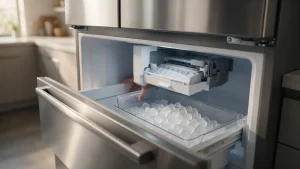
Targeted diagnosis for icemaker repair covering compartment temperatures, airflow, sensors, and IceMaker behavior common in Bay Area installations.
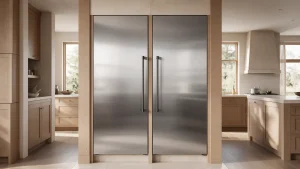
Targeted diagnosis for monolith refrigeration repair covering compartment temperatures, airflow, sensors, and IceMaker behavior common in Bay Area installations.
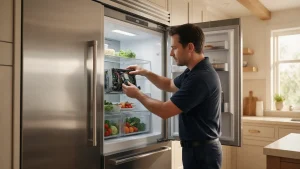
Targeted diagnosis for refrigerator repair covering compartment temperatures, airflow, sensors, and IceMaker behavior common in Bay Area installations.
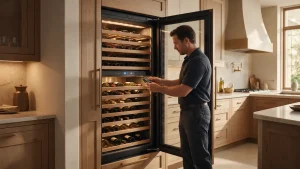
Targeted diagnosis for wine cabinet repair covering compartment temperatures, airflow, sensors, and IceMaker behavior common in Bay Area installations.
Share a few details and we’ll confirm an appointment. Prefer to talk? Call us and we’ll help right away.