

Specialized Liebherr Appliance Repair in San Francisco
Mon–Sat: 8:00 AM – 7:00 PM
Troubleshoot Liebherr refrigerator temperature alarm keeps going off: likely causes, safe owner checks, diagnostic clues, and when to schedule professional se
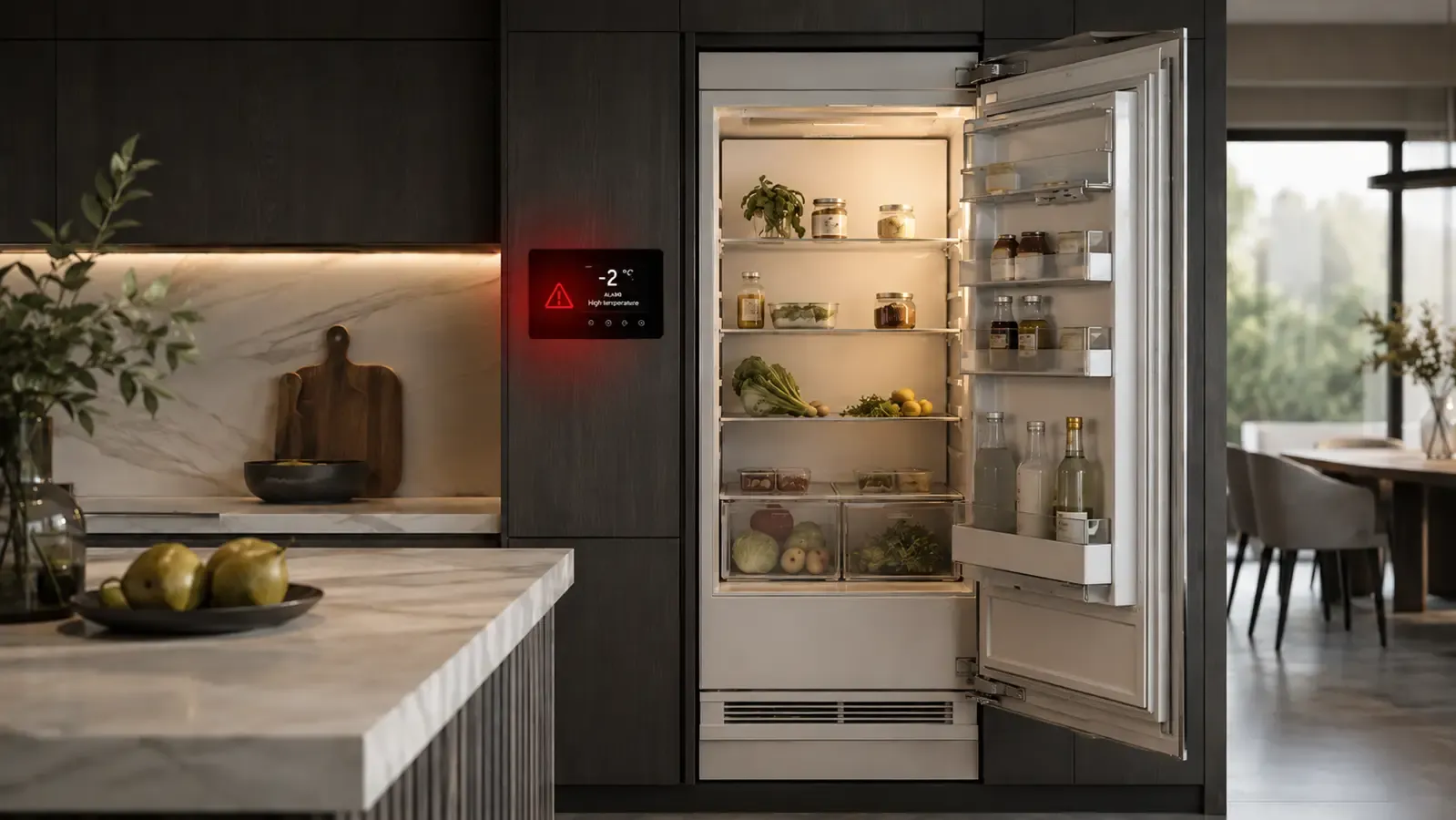
A repeating temperature alarm is a warning, not a diagnosis. It means the appliance detected a temperature condition outside its expected range or, on some models, recorded a temperature event. The priority is to verify the actual compartment temperature and find the event that keeps triggering the warning.
A temperature alarm that comes back every day deserves more attention than one that sounds once after a power blip. Note the time it starts, what the display shows, and whether anyone had just opened the door or loaded warm food. With a Liebherr temperature alarm that keeps returning, the timing of each return usually says more than the alarm tone itself.
A door event is one of the simplest ways to introduce enough warm air to trigger a temperature warning, especially if the gasket is leaking.
After a power outage or brief supply interruption, the cabinet can warm and the alarm may remain active until temperature recovery is complete.
Adding a large amount of unfrozen or unrefrigerated food can temporarily raise temperature enough to cause an alarm.
A fan, compressor start issue, defrost-related problem, or blocked airflow can let the cabinet warm and then recover, producing a repeating alarm pattern.
If measured temperature is stable while the alarm recurs, the control may be receiving unreliable sensor information or storing an event that needs model-specific interpretation.
Use this order for the repeating-alarm problem so each observation gives you information for the next step.
After these checks, let the appliance operate normally and judge whether the original problem has actually changed. A short-lived improvement after moving food, opening a door, or restarting power is not the same as a stable repair. This matters specifically for the repeating-alarm problem.
A CS1640 community repair report described a temperature alarm that returned roughly every day along with freezer-temperature movement. That recurring pattern supports treating repeated alarms as an intermittent fault investigation rather than repeatedly muting the buzzer.
The value of that pattern is not that another owner’s repair should be copied. For the repeating-alarm problem, the symptom sequence tells you what to measure next and which broad fault paths become less likely.
| Pattern | What it can mean | Best next check |
|---|---|---|
| Door left open or not sealing | A door event is one of the simplest ways to introduce enough warm air to trigger a temperature warning, especially if the gasket is leaking. | Check the real temperature with a separate thermometer before silencing and forgetting the alarm. |
| Power interruption | After a power outage or brief supply interruption, the cabinet can warm and the alarm may remain active until temperature recovery is complete. | Confirm the door closes fully and inspect for packages or drawers that interfere with closure. |
| Large warm food load | Adding a large amount of unfrozen or unrefrigerated food can temporarily raise temperature enough to cause an alarm. | Recall any power outage, breaker event, or long door opening before the alarm started. |
| Intermittent cooling or airflow | A fan, compressor start issue, defrost-related problem, or blocked airflow can let the cabinet warm and then recover, producing a repeating alarm pattern. | Record the highest displayed temperature if your model shows it, and note how quickly the appliance recovers. |
Use this table to triage a Liebherr temperature alarm that keeps returning, not as a parts list. If several rows fit, begin with the one that matches the time of day the alarm returns, such as after cooking or after a grocery run.
If resolving the repeating-alarm problem would require live-voltage measurements, internal control-board access, refrigerant work, or disassembly beyond the owner instructions, stop at the observation stage and move to model-specific service.
Arrange service rather than continuing trial-and-error if any of the following applies to a Liebherr temperature alarm that keeps returning:
At that point, this alarm-pattern case needs part-level testing based on the exact model/service number and its documentation.
If the basic checks do not explain a Liebherr temperature alarm that keeps returning, request a diagnosis with the model/service number, measured temperatures, display state, and a short timeline of what changed. Those details let the technician reproduce the fault instead of beginning with random part replacement.
You can acknowledge the sound according to your model instructions, but silencing the buzzer does not correct the condition that caused it. Verify temperature and recovery.
A repeating schedule can point to intermittent cooling, airflow, a recurring door condition, defrost behavior, or a sensor/control issue. A log of readings and timing is valuable.
Yes, if the compartment warms enough. The alarm should clear once conditions return to normal, depending on the model.
A door alarm is tied to the door being open for too long; a temperature alarm is tied to a temperature condition. They can happen together but should be diagnosed separately.
Share a few details and we’ll confirm an appointment. Prefer to talk? Call us and we’ll help right away.