

Specialized Liebherr Appliance Repair in San Francisco
Mon–Sat: 8:00 AM – 7:00 PM
Troubleshoot Liebherr monolith refrigerator not cooling: likely causes, safe owner checks, diagnostic clues, and when to schedule professional service.
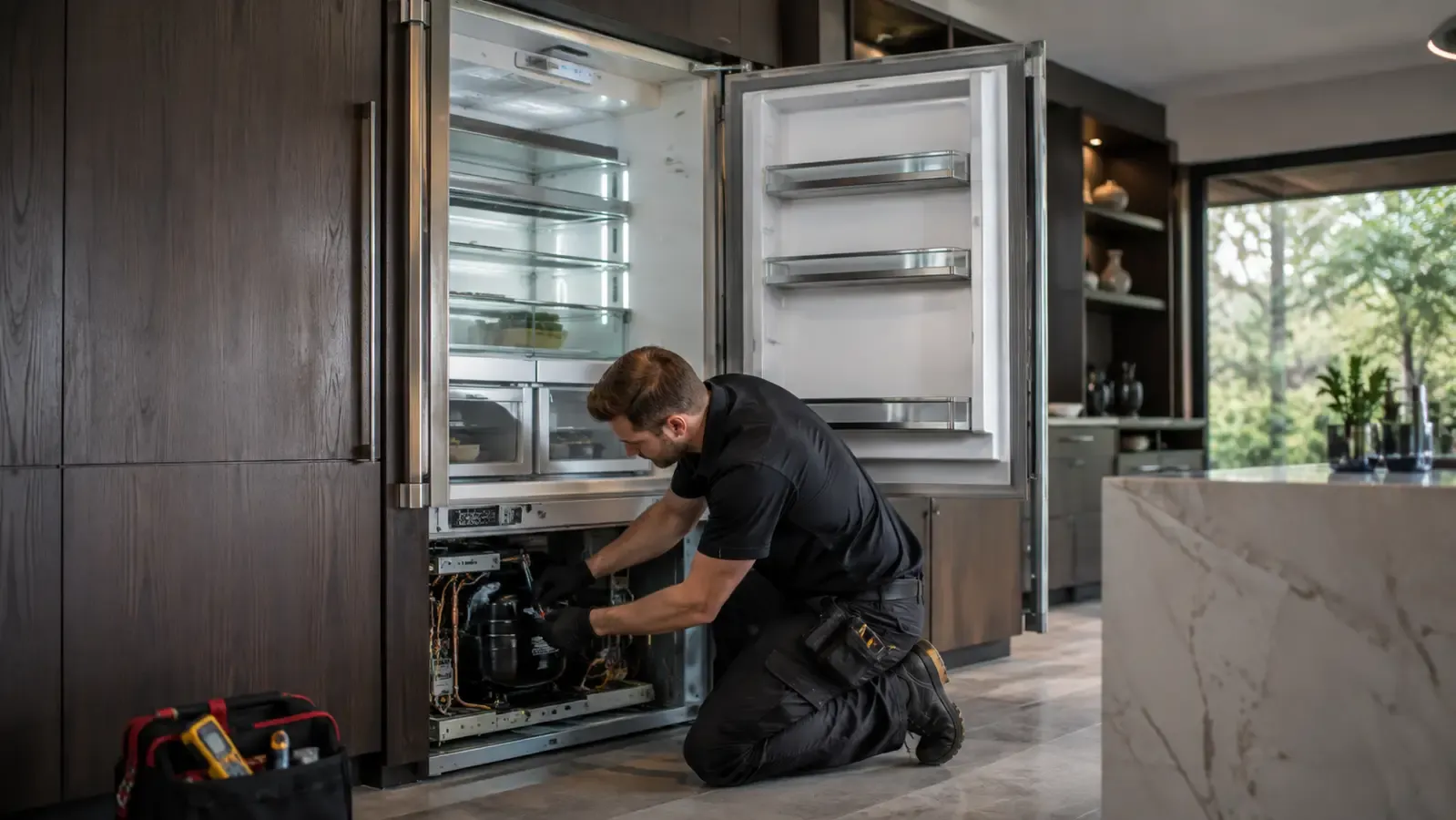
Liebherr Monolith is a premium built-in platform with electronic controls, advanced airflow, and model-dependent smart features. A ‘not cooling’ complaint should therefore include installation ventilation, door/panel alignment, actual temperature, alarms, and electronic status—not just compressor sound.
A Monolith column sits inside custom cabinetry, so installation details matter as much as the appliance itself. Ventilation clearances, a heavy door panel, and recent cabinet work can each raise the heat load before any part fails. When you describe a Liebherr Monolith refrigerator that is not cooling, start with the measured temperature and the installation, not with the compressor.
A built-in column depends on the specified intake/exhaust path. Cabinet changes, blocked grilles, or incorrect clearances can reduce heat rejection.
Heavy custom panels and hinge geometry can create a subtle seal problem that increases heat and moisture load.
Power failure can trigger alarms and recovery behavior; connected features may record status but are not a substitute for measuring temperature.
A high-performance built-in still depends on internal air movement. Fan or ice issues can create warm zones.
Monolith uses electronic temperature management; inaccurate sensing or control faults can produce alarm or display behavior that does not match actual temperature.
If installation, door, airflow, and sensing are correct, sealed-system capacity or compressor operation must be tested.
For the warm-column problem, collect useful evidence while leaving sealed-system and live-electrical testing to qualified service.
Let the column run through a full day with the door left alone and nothing new loaded, then measure again. If the reading improves after the ventilation and door checks, the installation was part of the story; if not, the alarm history and temperature record become the evidence.
Liebherr’s current Monolith materials highlight SmartDevice alarm messages for door-open and power-failure events. That makes alarm history and installation/door checks particularly relevant context when a Monolith column appears warm.
Because the SmartDevice messages cover door-open and power-failure events, an alarm history can show whether the column warmed after an outage or a door left open. Take a screenshot or note of those messages before anything changes.
A freestanding refrigerator can be moved away from the wall to see what is behind it. A Monolith column cannot, so owners have less visibility and more reason to rely on measurement. Start with what you can see from the front: whether the panel closes squarely against its neighbors, whether any grille or toe-space opening has been covered or narrowed, and whether the room has become hotter because of nearby cooking or sunlight. Keep a simple note of when the column last held its set temperature. If the problem began right after cabinet work, a panel change, or a renovation, say so clearly, because those events change the ventilation and the door load in ways the appliance cannot compensate for.
| Pattern | What it can mean | Best next check |
|---|---|---|
| Installation ventilation restricted | A built-in column depends on the specified intake/exhaust path. | Measure actual temperature in the affected Monolith compartment. |
| Door or panel alignment | Heavy custom panels and hinge geometry can create a subtle seal problem that increases heat and moisture load. | Inspect the door seal and custom panel alignment for rubbing or incomplete closure. |
| Power or SmartDevice-related event | Power failure can trigger alarms and recovery behavior; connected features may record status but are not a substitute for measuring temperature. | Check that the installation ventilation path is unobstructed. |
| Airflow/fan problem | A high-performance built-in still depends on internal air movement. | Review any door-open or power-failure alarm history if SmartDevice/controls provide it. |
Use this table to triage a Liebherr Monolith refrigerator that is not cooling, not as a parts list. If two rows fit, check the installation ventilation and the panel alignment first, since both are visible from the front of the column.
If resolving the warm-column problem would require live-voltage measurements, internal control-board access, refrigerant work, or disassembly beyond the owner instructions, stop at the observation stage and move to model-specific service.
Arrange service rather than continuing trial-and-error if any of the following applies to a Liebherr Monolith refrigerator that is not cooling:
If one of these signs appears with the warm-column problem, preserve photos, display messages, and temperature readings before arranging diagnosis.
Give the service team the Monolith model and service number, the measured temperatures, any door-open or power-failure messages, and a note on how the unit is installed, including panel weight and nearby heat. Mention recent cabinet or panel changes.
Start with actual temperature, door/panel seal, installation ventilation, airflow, alarm history, and controls. Built-in installation conditions matter as much as internal components.
Yes. Restricted ventilation or a panel that interferes with door closure can create a cooling problem even if the appliance components are otherwise functional.
Use it as useful status information, but verify the cabinet with a separate thermometer when diagnosing a cooling complaint.
The diagnostic principles are similar, but built-in ventilation, custom panels, premium control features, and model-specific access make correct service information especially important.
Share a few details and we’ll confirm an appointment. Prefer to talk? Call us and we’ll help right away.