

Specialized Liebherr Appliance Repair in San Francisco
Mon–Sat: 8:00 AM – 7:00 PM
Troubleshoot Liebherr refrigerator display temperature wrong: likely causes, safe owner checks, diagnostic clues, and when to schedule professional service.
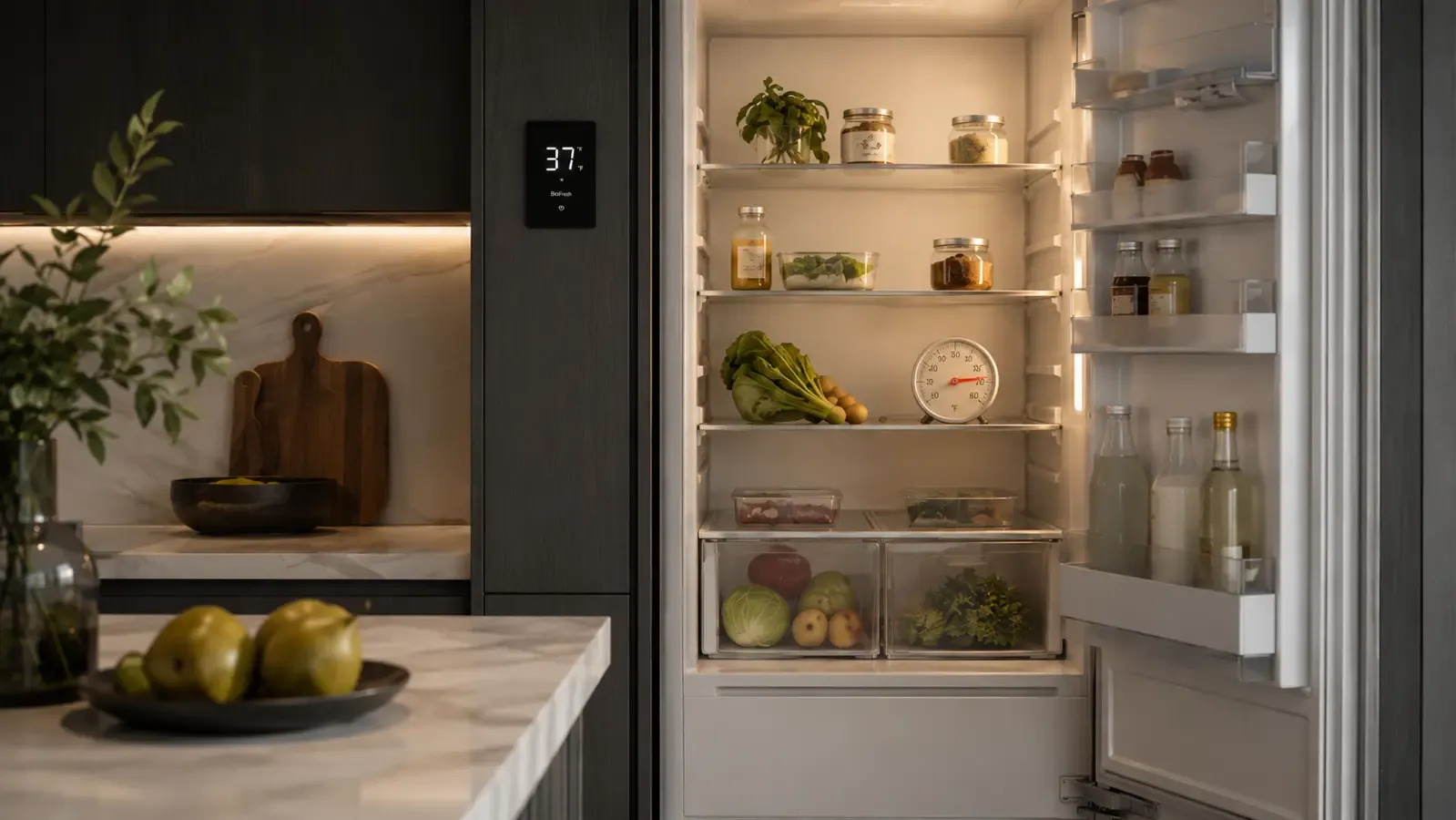
If a Liebherr display says the refrigerator is cold but food, drinks, or a separate thermometer say otherwise, treat the mismatch as a diagnostic symptom of its own. The problem may be placement and normal temperature gradients, but a large or persistent difference can also implicate sensing, airflow, or control.
A display that reads colder than the food feels is easy to dismiss and just as easy to over-trust. Start by finding out whether the gap is real: a thermometer placed in the middle of the cabinet gives you something to compare against. When troubleshooting a Liebherr display that does not match the measured temperature, that measured number does more work than any guess about the control board, and it separates a placement quirk from a sensor that is genuinely off.
The appliance sensor does not measure every point in the cabinet. Door shelves, a packed upper shelf, or a spot beside warm food can differ from the sensed zone.
A thermometer near the door or directly in airflow can exaggerate swings. Use a stable middle-shelf location and give the reading time to settle.
If the sensed area is cold while another zone is starved of circulation, the display can look normal even though food storage conditions are uneven.
A sensor that is out of calibration can feed the control a value that is consistently colder or warmer than reality.
Intermittent sensor wiring or electronic control problems can produce implausible readings, delayed cooling calls, or alarms that do not match observed conditions.
For the display-mismatch problem, collect useful evidence while leaving sealed-system and live-electrical testing to qualified service.
Finish by rechecking the original symptom under ordinary use. If it returns, the repeat pattern is evidence worth preserving for model-specific diagnosis. This matters specifically for the display-mismatch problem.
In community repair reports, CS1360 and CS1311 reports described display values around the upper 30s °F while separate measurements were reported around 50°F or higher. That is community evidence, not a specification, but it illustrates why a large display-to-cabinet gap should not be dismissed.
For the display-mismatch problem, model number plus symptom timing is more useful than buying whichever part fixed somebody else’s refrigerator.
| Pattern | What it can mean | Best next check |
|---|---|---|
| Normal sensor-to-shelf difference | The appliance sensor does not measure every point in the cabinet. | Use a known-good thermometer in a glass or stable central location rather than judging only by how food feels. |
| Thermometer placement or response time | A thermometer near the door or directly in airflow can exaggerate swings. | Compare readings over several hours, not immediately after the door has been open. |
| Poor internal airflow | If the sensed area is cold while another zone is starved of circulation, the display can look normal even though food storage conditions are uneven. | Move the thermometer to a second shelf to determine whether the problem is cabinet-wide or localized. |
| Temperature sensor drift | A sensor that is out of calibration can feed the control a value that is consistently colder or warmer than reality. | Check for blocked air channels and make sure containers are not packed tightly against the back wall or outlets. |
Use this table to triage a Liebherr display that does not match the measured temperature, not as a parts list. If two rows seem to fit, trust a settled thermometer reading over the display until the gap between them is explained.
If resolving the display-mismatch problem would require live-voltage measurements, internal control-board access, refrigerant work, or disassembly beyond the owner instructions, stop at the observation stage and move to model-specific service.
Arrange service rather than continuing trial-and-error if any of the following applies to a Liebherr display that does not match the measured temperature:
If one of these signs appears with the display-mismatch problem, preserve photos, display messages, and temperature readings before arranging diagnosis.
When a Liebherr display that does not match the measured temperature returns after the low-risk checks above, schedule diagnosis and include the observations you collected. Model-specific testing is especially important on Liebherr products because controls, alarms, IceMaker layouts, and sensor logic vary across generations.
No. A refrigerator has temperature gradients and the display is based on specific sensor logic. What matters is whether the overall storage temperature is stable and appropriate for your model.
A brief small difference can be normal. A persistent gap large enough that food is clearly too warm or freezing while the display looks normal deserves diagnosis.
Airflow can make the display look misleading without the sensor itself being defective. The sensor may be in a colder zone while another part of the cabinet is not receiving enough circulated air.
No. Verify the mismatch and basic airflow conditions before replacing parts. Sensor resistance and control behavior should be checked against model-specific service information.
Share a few details and we’ll confirm an appointment. Prefer to talk? Call us and we’ll help right away.