

Specialized Liebherr Appliance Repair in San Francisco
Mon–Sat: 8:00 AM – 7:00 PM
Troubleshoot Liebherr nofrost ice buildup with practical checks for the most likely causes, symptom clues, and signs that professional diagnosis is needed.
Liebherr NoFrost is designed to keep the freezer compartment free from the heavy frost buildup that requires manual defrosting. Visible frost after a brief door opening is not the same as a NoFrost system that repeatedly ices over.
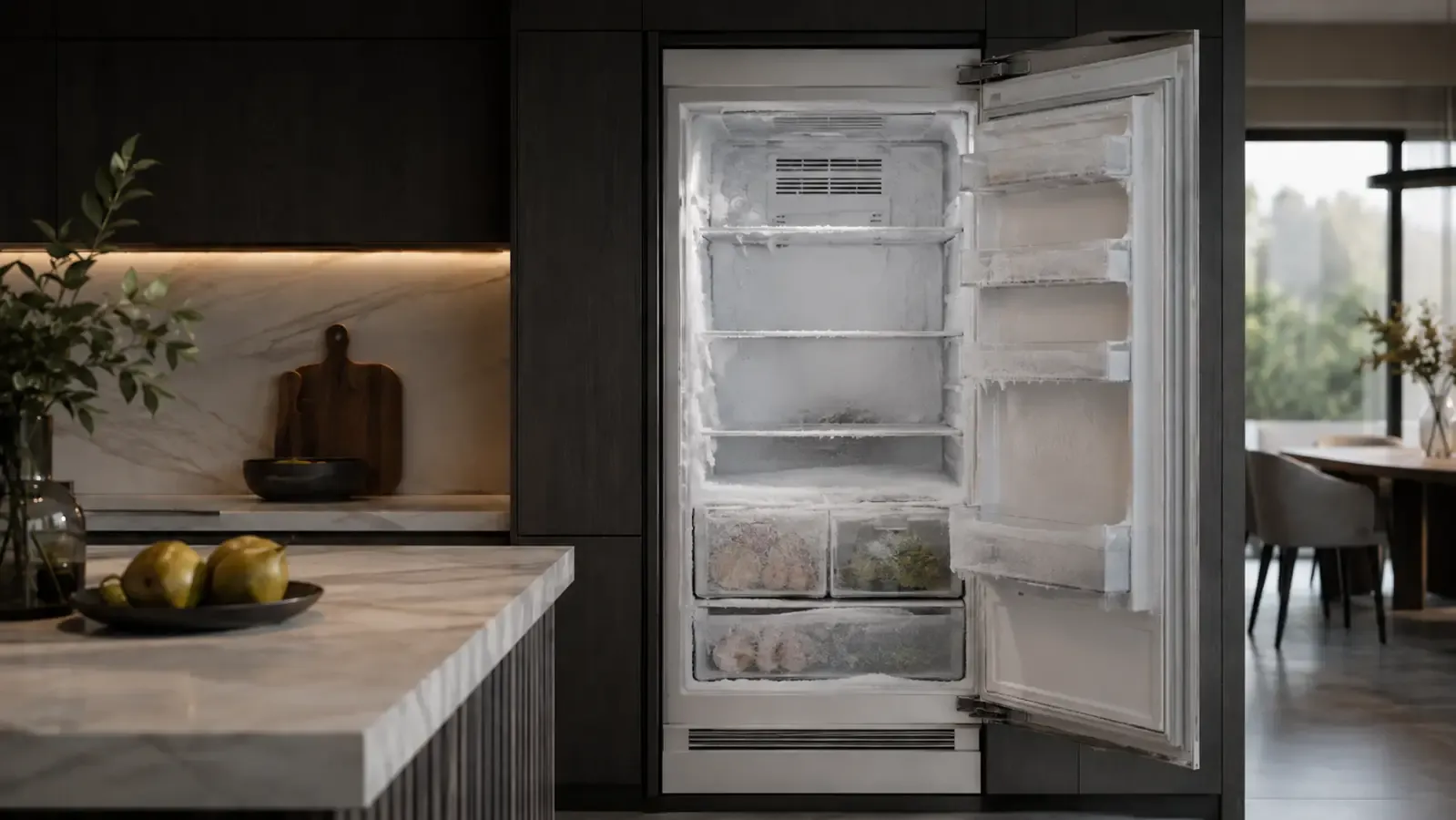
Light frost on a package after the door has been open a while is ordinary. Ice that coats the rear wall, welds drawers in place, or returns soon after a thaw means the NoFrost system is no longer keeping up with the moisture that reaches it. With heavy ice buildup in a Liebherr NoFrost freezer, where the ice sits tells you whether to suspect the door seal, the drain, or the airflow.
A gasket gap or door left ajar introduces moisture faster than the NoFrost system is designed to handle.
Water that cannot leave the evaporator area can refreeze and build ice in places where it should not remain.
If the automatic defrost process does not melt or terminate correctly, ice can progressively cover the evaporator.
Ice around the fan can reduce circulation, cause noise, and make the freezer warmer even while the evaporator itself is very cold.
Blocked internal air paths can create localized frost and poor temperature distribution.
These checks for the NoFrost icing problem are deliberately low-risk and are meant to narrow the diagnosis, not to bypass safety devices.
After you have noted where the ice sits and cleared the air outlets, leave the freezer alone for a week or so. A thaw that holds for months is a different result from ice that returns in days, and only the second tells you the root cause was never fixed.
Liebherr describes NoFrost as a system intended to prevent frost and ice buildup in the freezer compartment. Persistent heavy ice therefore points to a condition worth diagnosing rather than treating routine manual defrosting as the permanent solution.
Because NoFrost is built to prevent this, repeated manual defrosting should be treated as a warning sign rather than routine upkeep. Write down how fast the ice returns after each thaw; that interval is useful evidence.
| Pattern | What it can mean | Best next check |
|---|---|---|
| Warm humid air leaking through the door | A gasket gap or door left ajar introduces moisture faster than the NoFrost system is designed to handle. | Identify where the ice forms: on packages, the rear cover, around a fan, or as a sheet at the bottom. |
| Defrost drain or water path problem | Water that cannot leave the evaporator area can refreeze and build ice in places where it should not remain. | Inspect door closure and the gasket for frost trails that point to an air leak. |
| Defrost heater, sensor, or control fault | If the automatic defrost process does not melt or terminate correctly, ice can progressively cover the evaporator. | Do not chip ice with a knife or sharp tool; that can puncture liners or refrigeration components. |
| Evaporator fan restricted by ice | Ice around the fan can reduce circulation, cause noise, and make the freezer warmer even while the evaporator itself is very cold. | If a full safe thaw temporarily restores performance, note how quickly the ice returns. |
Use this table to triage heavy ice buildup in a Liebherr NoFrost freezer, not as a parts list. If more than one row seems to apply, the frost trails along the door gasket and the drain row are the quickest to confirm from the outside.
If resolving the NoFrost icing problem would require live-voltage measurements, internal control-board access, refrigerant work, or disassembly beyond the owner instructions, stop at the observation stage and move to model-specific service.
Arrange service rather than continuing trial-and-error if any of the following applies to heavy ice buildup in a Liebherr NoFrost freezer:
These conditions move this iced-freezer case beyond routine owner checks and into component diagnosis.
Tell the service team where the ice first forms, how many days it takes to return after a full thaw, and whether you hear the fan scrape. Photographs of the rear panel area and the drawer rails, taken before you thaw anything, help a great deal.
Routine manual defrosting should not be necessary for normal NoFrost operation. A one-time thaw can clear an ice blockage, but recurrence means the cause still exists.
Yes. Moist room air entering through a leak can create more frost than the automatic system can manage.
Ice can contact the fan or restrict airflow around it. Do not force the fan; clear the underlying ice condition safely and diagnose why the ice formed.
Not exactly. A solid sheet or lake of ice at the bottom often points more specifically to a drainage or water-path problem and has its own diagnostic article.
Share a few details and we’ll confirm an appointment. Prefer to talk? Call us and we’ll help right away.