

Specialized Liebherr Appliance Repair in San Francisco
Mon–Sat: 8:00 AM – 7:00 PM
Troubleshoot Liebherr freezer humming noise with practical checks for the most likely causes, symptom clues, and signs that professional diagnosis is needed.
A freezer hum becomes much more informative when it changes with the door. If the noise stops as soon as the door opens, the evaporator fan or another component controlled by the door state deserves attention before the compressor is blamed.
A hum that stops the moment the door opens is a strong hint, because it points toward a part switched off by the door rather than toward the compressor itself. Pay attention to whether the sound fades or cuts off, and whether anything changed in the freezer shortly before it began. For a persistent humming noise from a Liebherr freezer, that door-state observation is the most useful single detail to bring.
A fan at higher speed can produce a noticeable hum, particularly when the freezer is recovering after loading or door use.
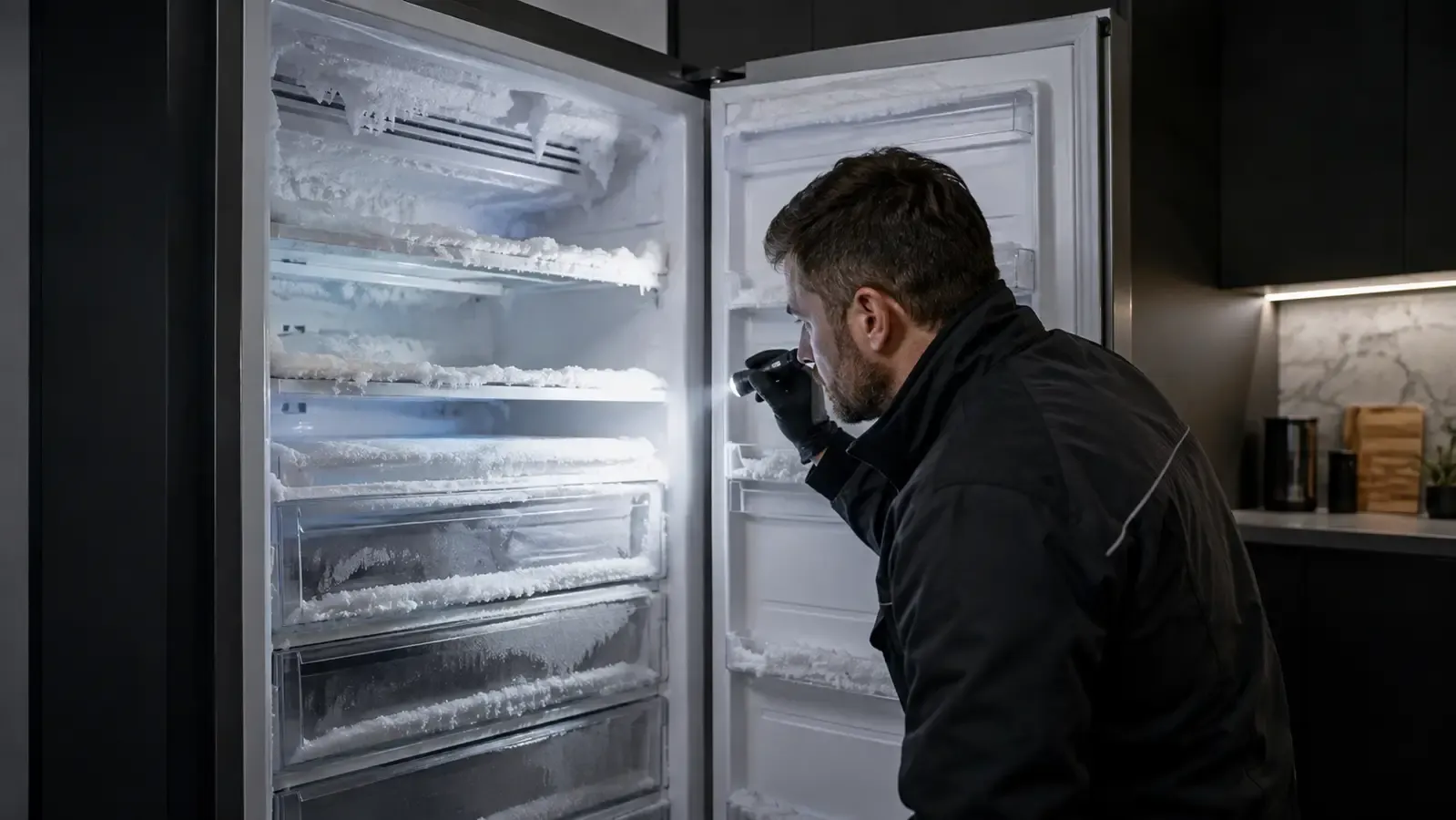
Even a small ice ridge can make the fan hum, buzz, or scrape and may worsen as frost grows.
A worn motor can hum or drone and may become louder as the fan warms.
Blocked air passages can increase turbulence and change the pitch of the fan.
A fan or compressor vibration can resonate through a drawer, cover, or integrated cabinet panel.
Work from checks that do not require opening electrical or refrigeration-system compartments while investigating the freezer-hum problem.
Give the freezer a few ordinary days before deciding the sound has gone. A hum that returns once frost builds up again suggests the fan is meeting ice, and a hum that never left suggests a worn fan or a vibrating panel.
A community repair case described a Liebherr freezer humming after defrosting/cleaning, with the sound changing when the door was opened. That door-state clue is more diagnostically useful than the word ‘humming’ alone.
In the defrost-and-clean case, the hum changed when the door was opened. That is the pattern worth recording for your own freezer, since the word humming alone describes dozens of different faults.
Because a freezer fan moves cold air across the evaporator, frost near that area can start to touch the blade. You may notice the hum changing pitch as ice builds up, then easing after a thaw. Look only at what is visible without removing covers: a rough patch of frost around an air outlet, ice at the rear of a drawer, or packages pushed against the rear wall. Move the packages back and note whether the noise changes after a day or two. If it returns with the same pattern each time frost builds, that cycle is the evidence a technician will ask for first.
| Pattern | What it can mean | Best next check |
|---|---|---|
| Evaporator fan running normally but loudly | A fan at higher speed can produce a noticeable hum, particularly when the freezer is recovering after loading or door use. | Open the freezer door while the hum is present and note whether it stops immediately or fades slowly. |
| Fan blade contacting frost or ice | Even a small ice ridge can make the fan hum, buzz, or scrape and may worsen as frost grows. | Check for visible frost near fan-airflow areas without removing internal covers. |
| Fan bearing wear | A worn motor can hum or drone and may become louder as the fan warms. | Make sure drawers and food packages are not touching panels or blocking vents. |
| Airflow restriction | Blocked air passages can increase turbulence and change the pitch of the fan. | Record whether the freezer temperature remains stable during the noise. |
Use this table to triage a persistent humming noise from a Liebherr freezer, not as a parts list. When more than one row applies, begin with the door test and the frost check, since both reveal fan behavior from the outside.
If resolving the freezer-hum problem would require live-voltage measurements, internal control-board access, refrigerant work, or disassembly beyond the owner instructions, stop at the observation stage and move to model-specific service.
Arrange service rather than continuing trial-and-error if any of the following applies to a persistent humming noise from a Liebherr freezer:
Repeated resets or thawing can hide the freezer-hum problem temporarily without correcting the root cause, so stop once these signs appear.
Tell the service team whether the hum stops immediately or fades when you open the door, whether it started after a defrost or cleaning, and whether the freezer temperature stayed steady. A short audio clip taken near the cabinet can be useful too.
The interior fan may run with the door closed and stop when the door opens. That makes the fan, ice contact, and airflow stronger suspects.
Yes. Frost or ice can touch the blade or restrict airflow. If the ice returns, diagnose the underlying defrost or door-seal issue.
No. Fans, valves, airflow, and cabinet resonance can all hum. Use the door-open test and sound location to narrow it.
Do not lubricate internal electrical fan motors unless the service documentation specifically calls for it. A noisy motor is usually diagnosed and replaced as a component.
Share a few details and we’ll confirm an appointment. Prefer to talk? Call us and we’ll help right away.