

Specialized Liebherr Appliance Repair in San Francisco
Mon–Sat: 8:00 AM – 7:00 PM
Troubleshoot Liebherr refrigerator freezing food: likely causes, safe owner checks, diagnostic clues, and when to schedule professional service.
Food freezing in the refrigerator section usually means the local temperature is too low, the airflow is hitting food directly, or the control system is overcooling. Before changing parts, identify exactly where the freezing occurs.
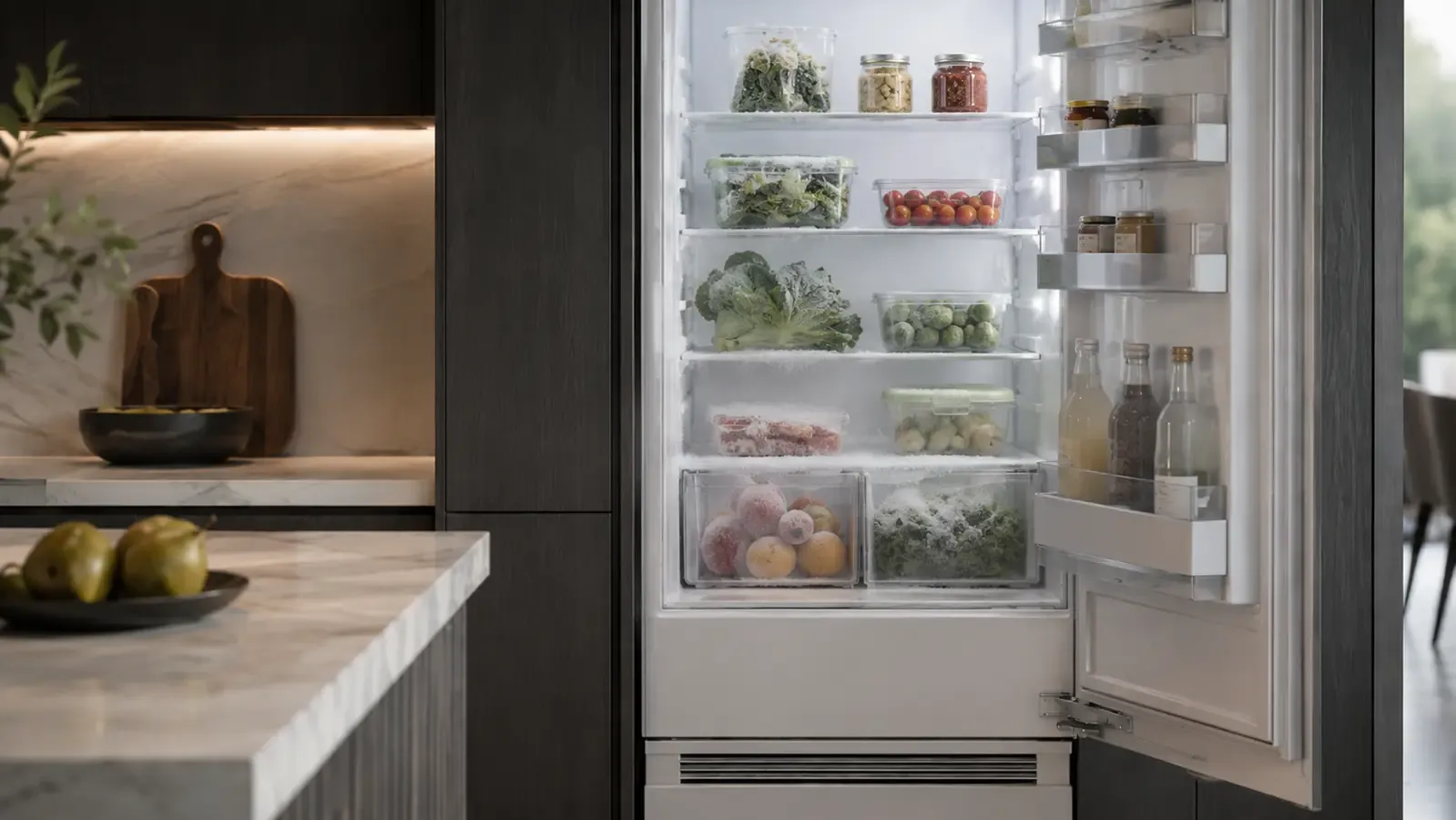
Lettuce turning glassy or a drink going slushy tells you where the cold is concentrated, and that location is the most useful clue you have. Before touching any setting, note which shelf or drawer is affected and how the food was placed. When you deal with food freezing inside a Liebherr refrigerator, mapping the spot first keeps you from changing the whole cabinet’s setting when only one air outlet is blowing on the food.
Items touching the rear wall or sitting directly in a cold air stream can freeze even when the average cabinet temperature is acceptable.
A low setpoint or an inadvertently active SuperCool function can push susceptible foods below their ideal storage temperature.
Overpacking can force chilled air through a narrow path and create localized freezing near outlets.
If the control thinks the cabinet is warmer than it really is, it can request excessive cooling.
A damper, fan-control, valve, or electronic fault can overfeed cold air to the refrigerator compartment on designs that use those components.
These checks for the overcooling problem are deliberately low-risk and are meant to narrow the diagnosis, not to bypass safety devices.
Do not call the issue resolved until the appliance has had enough normal operating time to show that the symptom is gone rather than temporarily hidden. This matters specifically for the overcooling problem.
Liebherr’s FAQ specifically notes that an incorrect set temperature and an unintentionally active SuperCool/SuperFrost function can make a compartment too cold. It also states that BioFresh has its own near-0°C temperature behavior, so food freezing in BioFresh should be evaluated separately from the main refrigerator compartment.
Community evidence is useful as a clue, never as a universal parts diagnosis. With the overcooling problem, two Liebherr models can present a similar complaint for different reasons.
Most freezing in a refrigerator section happens within a few inches of an air outlet or the rear wall. Containers of soup, sealed drinks, and wet produce freeze first because their water content leaves little margin. Try moving one susceptible item to a door shelf for a day and compare it with a twin item left where it froze. If only the item near the outlet is affected, the cause is placement and airflow, not a failing control. If items freeze everywhere regardless of position, document the setpoint, the SuperCool state, and a middle-shelf reading, and treat it as a whole-cabinet overcooling case.
| Pattern | What it can mean | Best next check |
|---|---|---|
| Food placed in the coldest airflow path | Items touching the rear wall or sitting directly in a cold air stream can freeze even when the average cabinet temperature is acceptable. | Map where freezing occurs: back wall, top shelf, one drawer, or the entire compartment. |
| Set temperature is too low | A low setpoint or an inadvertently active SuperCool function can push susceptible foods below their ideal storage temperature. | Check the temperature setting and confirm SuperCool is not left active unintentionally. |
| Blocked circulation creates cold pockets | Overpacking can force chilled air through a narrow path and create localized freezing near outlets. | Move delicate produce and liquids away from the rear wall and direct air outlets. |
| Sensor is reading too warm | If the control thinks the cabinet is warmer than it really is, it can request excessive cooling. | Measure the middle-shelf temperature with a separate thermometer. |
Use this table to triage food freezing inside a Liebherr refrigerator, not as a parts list. When two rows fit, deal with food placement and the SuperCool setting before suspecting the sensor or the control.
If resolving the overcooling problem would require live-voltage measurements, internal control-board access, refrigerant work, or disassembly beyond the owner instructions, stop at the observation stage and move to model-specific service.
Arrange service rather than continuing trial-and-error if any of the following applies to food freezing inside a Liebherr refrigerator:
These conditions move this frozen-produce case beyond routine owner checks and into component diagnosis.
For the overcooling problem, the strongest service request includes evidence: the exact model, when the symptom starts, what the display shows, a separate temperature reading where relevant, and any door, power, water, or noise event that happens at the same time.
The rear area can be colder and may also be near an airflow path. Move food forward and verify that nothing is pressed against the back wall.
If it is active when it is not needed, it can contribute to colder-than-normal conditions on some models. Check your model’s operating instructions for how the function behaves.
A modest correction is reasonable if the setpoint is too low. If the cabinet continues to overcool after the setting is corrected, investigate sensing and control.
BioFresh is designed to operate close to 0°C, but food should not be indiscriminately freezing. Check the BioFresh setting and the type of food stored there.
Share a few details and we’ll confirm an appointment. Prefer to talk? Call us and we’ll help right away.